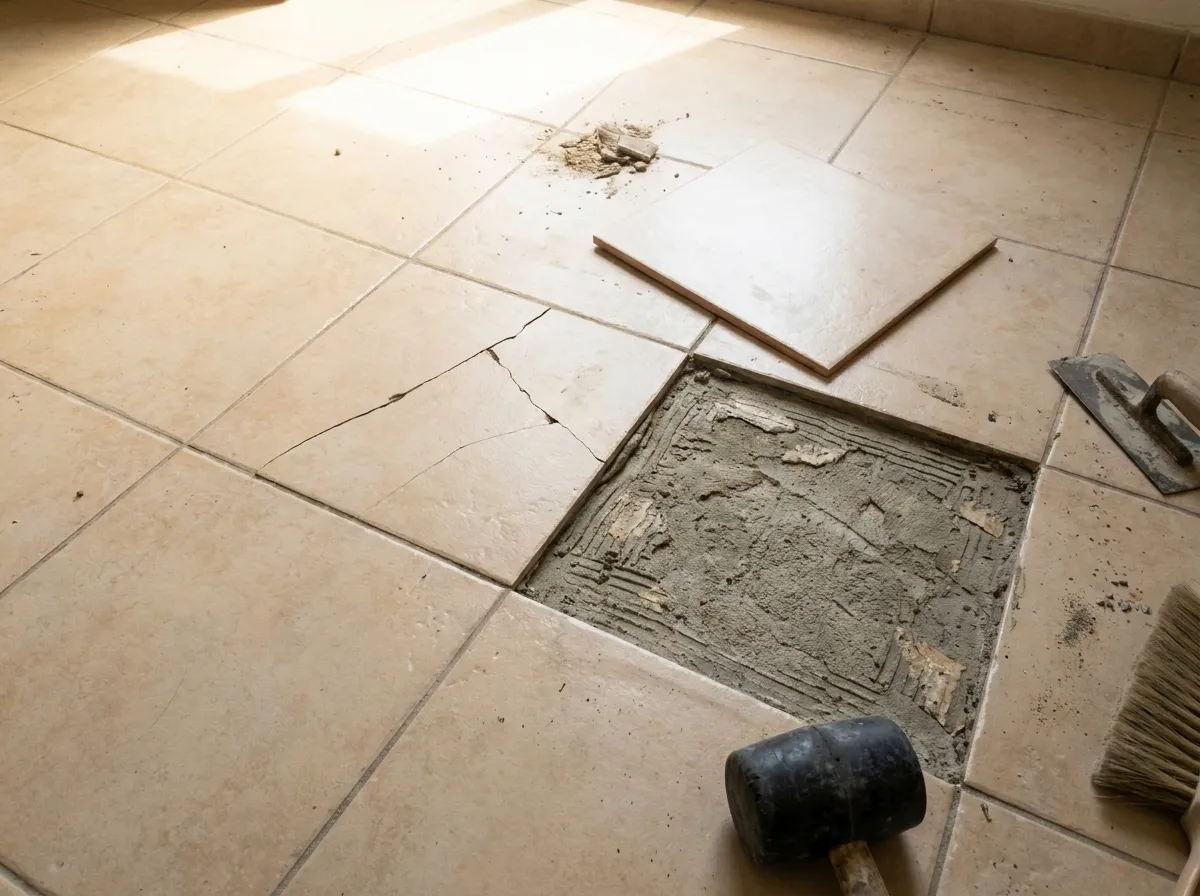
We find out why a tile cracked, went hollow or lifted — thin adhesive, a moving slab, water under the tile — and fix that cause, not just the tile on top. Labour from IDR 350,000 per tile with the call-out included, regrouting from IDR 140,000/m², free site visit and a fixed quote before any tile comes up.
Most tile repairs in Bali cost from IDR 350,000 per tile for labour, call-out included, and regrouting starts from IDR 140,000 per m². Replacement tiles, adhesive, grout and membrane are quoted separately. We confirm the price after tapping the floor on site, because two cracked tiles that look the same can have very different causes underneath. We repair floors and walls in villas, rentals, guesthouses and shops across the island:
Nearly every tile failure we attend traces back to a short list of avoidable causes from the original installation:
The cause decides the repair. If a tile cracked because the slab is moving, a new tile on the same slab cracks again. Bali's heat, humidity, salt air and fast building pace mean many floors were laid quickly, and the shortcuts show up two or three wet seasons later. Our guide to what tilers check before tiling explains the water-related failures in more detail.
A repaired tile that fails again in six months isn't a repair. We start by finding out why the tile failed — hollow base from poor adhesive coverage, substrate movement, the wrong adhesive, or missing waterproofing. Replacing the tile without fixing the cause just resets the same clock.
We lift the failed tiles cleanly, protecting the surrounding sound tiles, and clear out the old adhesive bed back to a solid base. Rushing this step is how a single-tile repair turns into a much bigger one.
The replacement goes back with full adhesive coverage and, where the original failed for waterproofing or movement reasons, we address that too — re-membrane the wet area or add a movement joint — before setting the tile.
For failed or stained grout we rake out and re-grout, and silicone the corners that should never have been rigid-grouted. On stone we re-seal so the repaired area matches and resists future staining.
The hardest part of most repairs is the matching, not the fixing. An invisible repair needs a tile that matches the original in size, colour, finish and thickness. We first check for spare tiles from the original job — many villas have a box in a store room or garage. If not, we take a sample to the suppliers and showrooms in Canggu, Seminyak, Kuta and Denpasar to find the same line or the closest match.
When an exact match cannot be found — common with older or imported tiles — there are practical options. We can lift a tile from a hidden spot, such as inside a wardrobe or under an appliance, use it for the visible repair and put the near-match where nobody will see it. In feature areas a deliberate contrasting tile or border can make the repair read as a design choice. Either way, we show you the proposed tile against the existing floor before fixing anything. Natural stone and terracotta are harder to match because of natural colour variation — for stone floors see natural stone installation.
Often the tiles are sound and only the grout has failed. In Bali's humidity grout cracks, stains and grows mould faster than almost anywhere, and once it breaks down it lets water reach the substrate. Regrouting — raking out the old grout and replacing it — restores the look and the water seal without disturbing the tiles.
It pays to change the grout type while you are at it: mould-resistant or epoxy grout in bathrooms, salt-resistant grout near the coast. Cost is mostly labour, because cement grout itself is cheap — regrouting starts from IDR 140,000 per m², or from IDR 240,000 per m² with epoxy, and a single bathroom is a modest job. Our grout maintenance guide explains how to keep new joints clean. If grout keeps dropping out around a shower base and the tiles nearby sound hollow, the membrane has probably failed, and the fix is a bathroom strip-back and re-tile, not new grout.
A targeted repair is the right call when the damage is local — a few cracked or hollow tiles in an otherwise solid floor — the surrounding tiles are well bonded, a matching tile is available, and there is no waterproofing or substrate failure underneath. Repairs are faster, cheaper and far less disruptive, and a good one is invisible.
A full retile makes more sense when failures are spread across the floor, when the membrane has failed in a bathroom or on a terrace and water is reaching the structure, when the slab itself is moving and will keep cracking new tiles, or when no acceptable matching tile exists. In those cases repeated spot repairs cost more over time than doing the job once with proper waterproofing and substrate prep. We tell you which case you have before quoting either.
| Work | Labour (IDR) | Notes |
|---|---|---|
| Tile repair — lift and re-bed, or replace | from 350,000 per tile | Includes call-out and root-cause check |
| Regrouting — rake out and regrout | from 140,000 per m² | Epoxy from 240,000 per m²; grout type agreed on site |
| Wet area strip-back and re-tile | walls from 150,000 · floors from 170,000 per m² | Membrane re-applied, falls re-set |
| Re-laying a larger floor area | from 130,000 per m² | Straight lay; screed work quoted after the visit |
Materials are quoted separately. The site visit and the tap survey are free, and the price is fixed in writing before any tile comes up. All rates side by side are on the tiling price list.
Island-wide: Canggu, Seminyak, Kuta and Legian, Denpasar, Sanur, Jimbaran, Nusa Dua, Uluwatu and Ubud. Same rates everywhere, no travel surcharge.
When a repair turns into new work we also handle bathroom tiling, floor tiling, pool tiling and re-tiling, outdoor and terrace tiling and natural stone installation.